
Like most nerds in this country, I’ve been glued to Ken Burns’ The American Revolution on PBS. Who can resist the siren call of old-timey flute music, pretentious celebrity voiceovers, and LOCAL HERO Peter Coyote’s gravelly hippie narration??? Also can we talk about how Burns and Coyote have become a two man cottage industry with these docuseries?? Call me when you do the RISE OF FASCISM IN AMERICA, boys, I’ll read the part of Kristi Noem. I was born in the Midwest, I promise I can nail the accent.
So here I am, deep into Ep 3 (THE TIMES THAT TRY MENS SOULS) drinking some pinot from my elitist Sonoma wine club and accumulating a pile of pistachio shells next to the bed (don’t tell Brandon), when I learn that the Hessians came with a whole lore. Most of us know from elementary school that the Hessians were German mercenaries hired by the British to fill the ranks in the US. But did we know that American soldiers were terrified of them and thought they were bloodthirsty cannibals?? And that it lost them a couple of battles? An urban legend from the 18th century about cannibal soldiers is like, squarely in my wheelhouse, so I ditched the post I’ve been sitting on for a week to tell you all about it.
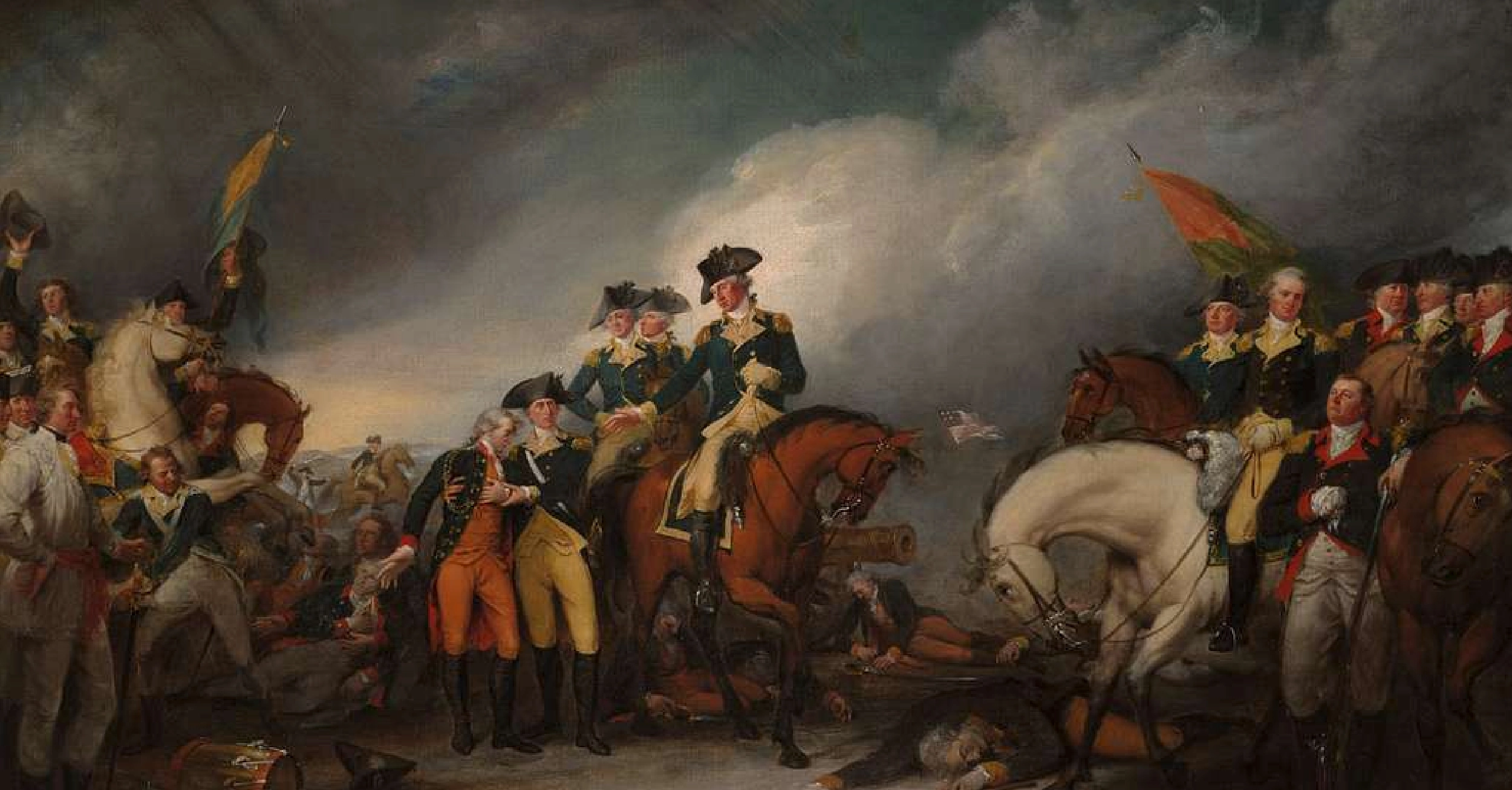
The Facts
At the time of the colonial revolution, Germany wasn’t a state as we know it now- it was composed of several different principalities, each with their own feudal ruler. These principalities ran well disciplined, highly trained armies that they rented out all over Europe. Many of the soldiers were drafted, so it’s kind of a misnomer to call them mercenaries – it was the Prince who was being paid for their services, they didn’t rent themselves out. The life of the soldier wasn’t terrible, however. They were paid pretty well and exempt from certain taxes. Like most armies, they got to keep some of the spoils of war. Some soldiers even enlisted to see the world and collect scientific information – you couldn’t just hop on a NatGeo cruise at that time.
When the American Revolution kicked off, Britain was stretched militarily, and they needed extra soldiers. One third of the soldiers sent to fight the colonists were Germans for hire. While this was a common practice in Europe, the colonists were especially affronted because this was seen more as a civil war, and this was pitting foreigners against fellow British countrymen. That sounds crazy today, but there were a lot of feelings of betrayal on both sides of this war, and it shows up in the attitudes and eventually, in the folklore. Most of the soldiers for hire came from the principality of Hesse-Kassel, which is where “Hessian” comes from. It’s a word unique to the American revolution.
The Lore
The Hessians were not popular! Obviously! Because they were seen as greedy, uncouth foreigners fighting Britain’s own people, they were immediately called out and used as propaganda against the Crown. In the Declaration of Independence, Thomas Jefferson named the Hessian hire as one of King George’s crimes against America, writing that “He is at this time transporting large Armies of foreign Mercenaries to compleat the works of death, desolation and tyranny, already begun with circumstances of Cruelty & perfidy scarcely paralleled in the most barbarous ages, and totally unworthy the Head of a civilized nation.” In 1776, when the British Navy came into New York Harbor, it carried 8,600 Hessian troops. But Friederike Baer, a professor who wrote a book about Hessians in America, tells Burns that propaganda against the German soldiers started before they even arrived.
The propaganda worked, too. Burns tells us that “everything about the German soldiers was intended to intimidate,” and that they wore tight clothing and foot tall helmets to make themselves look bigger and stronger. They also wore beards – which only a SAVAGE would do in a time of powdered wigs and ponytails. He tells us that their reputation for ferocity preceded them, and some Americans “believed them to be cannibals with a special taste for babies.”
Look, I’ve been writing about folklore for a long time and let me tell you something – any time the word “cannibal” is thrown around they’re talking about THE OTHER in society. Cannibalism is used to denote savagery and was usually applied to local people in the way of the empire. We called Native Americans, Africans, Southeast Asians, Jews, and most recently, Haitians, cannibals. In the world of anti-British propaganda, the Germans were lumped into this savage class.
Baer agrees. She writes that “In the colonies, the Hessians were vilified as ruthless mercenaries hired to do King George’s dirty work. The word ‘Hessian’ became a racialized slur used interchangeably with ‘Catholics,’ ‘savages’ and ‘negroes,’ says Baer. ‘This was all meant to signify that these are violent, uncivilized, non-white people that the king is dispatching across the ocean to fight against us.’”
This is probably a whole topic in itself, but in wartime propaganda, urban legends and dehumanizing behavior take on a visceral, bodily tone. Body parts kept as trophies, stories of cannibalism, scalping, and desecration of remains tell the story of the intense fear and trauma that war survivors endured. It seems obvious today to us today that German soldiers were not eating babies but how many of us believed that Al Qaeda sleeper cells were hunkering down in flyover states waiting to bomb the local mall? This is an expression of fear, which in the sum totality of war, is reasonable. It just takes on outlandish qualities when it enters the public imagination and is expressed as urban legends and folklore. Like Gigantic Teutonic barbarians coming to feast on colonial children.
In fact, America’s most famous ghost is an actual fucking Hessian. Washington Irving wrote the Headless Horseman into the Legend of Sleepy Hollow as “the ghost of a Hessian trooper:
The Modern Era
Maybe this folklore is the reason that schoolchildren still learn the word “Hessian.” I have been polling people this week, and it’s kind of astonishing how many regular ass Americans know the term for a corps of soldiers from 250 years ago. We are famously not super historically literate people. Folklore has a way of working ideas like this into the fabric of culture, and it’s possible that the stories were strong enough to trickle down into our vocabularies over the century.
We also have a lot of German Americans in the US and that’s partly due to Hessian influence. Five to six thousand of the soldiers stayed here after the war and put down roots in America. Up to 13% of us have some German ancestry, which makes the Hessian story a relatable and important part of the American story. We have a complicated history with Germany, of course, having fought them in two world wars and imprisoned Americans of German descent in internment camps in the US – a fact I only recently learned. Maybe it’s this complex history that keeps the story of the Hessians fresh in academic and folk texts.
A recent archaeological dig put a poignant cap on this history. In 2022, a dig at Red Bank Battlefield Historical Park in New Jersey turned up the remains of 13 Hessian soldiers. Buried in a mass grave, these soldiers were part of the 377 Germans who died fighting there in 1777. Their skeletons show signs of musketball and grapeshot damage – a horrible way to die. Wade Catts, a researcher on site, said “This trench gives you a very different view of what that brutality of warfare is. And it’s brutality that has been that way since the 18th century. The Hessian soldiers that are here—this was not the space they intended to end their lives in. Part of what we are hoping to be able to achieve here is to learn who these soldiers were, who these men were, and give them some level of dignity and respect in reburial.”
Not baby eating cannibals, not 7 foot tall super soldiers, not headless swordsmen – just some guys drafted into a war so their Prince could make money, dying far away from home.